Projects
Risks and Mitigation of Antimicrobial Resistance Across One Health Sectors – AMaRONE
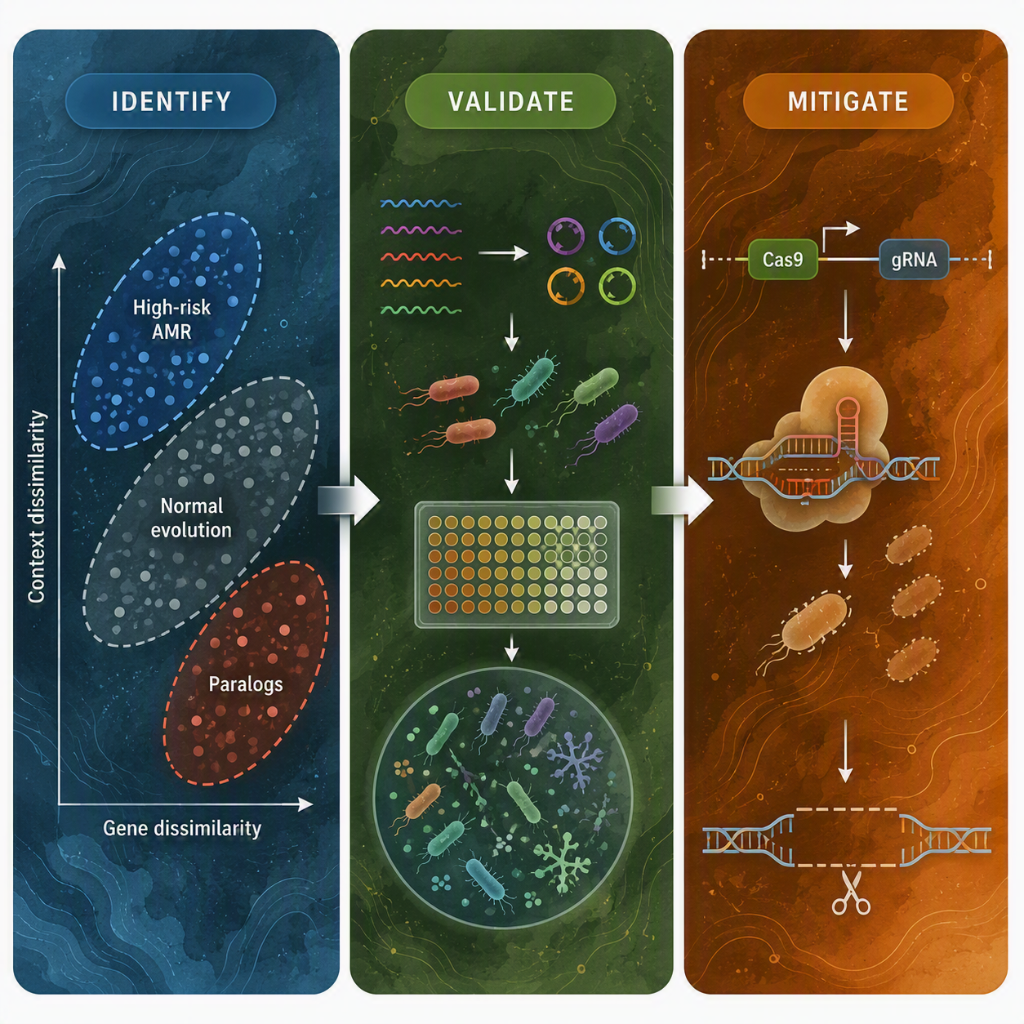
AMaRONE investigates antimicrobial resistance (AMR), a growing global health concern where bacteria become resistant to antibiotics and infections become harder to treat. AMR is a One Health problem affecting humans and animals, with strong links to the environment, meaning that resistance genes can move across clinical, agricultural, and natural settings. The project uses publicly available long-read metagenomes from all One Health sectors to capture full-length resistance genes together with their mobile genetic elements and host genomes, allowing us to identify mobile latent antibiotic resistance genes and trace their movement from environmental reservoirs towards clinical contexts.
Building on this genomic foundation, AMaRONE verifies the phenotypic impact of selected resistance genes and develops proof-of-concept mitigation strategies that target their mobility and expression. The outcomes will support enhanced environmental and wastewater surveillance of AMR, contribute to risk prediction for emerging resistance threats, and inform proactive mitigation across One Health sectors.
From Clay to Code: Investigating Microbial Evolution in Response to Human Influence

Microbes have long been controlled with bioactive chemicals, but this has contributed to rising threats such as antimicrobial resistance. While microbes naturally adapt—often to our disadvantage—these adaptations can also inform new strategies against microbial threats. By analyzing ancient microbes preserved in archaeological ceramics and comparing their genomes to modern relatives, we can uncover how human activities have shaped microbial evolution over time.
This project aims to establish a scientific foundation for investigating viable ancient bacteria recovered from archaeological ceramics. Building on our developed method for reviving dormant microbial cells, we will determine the evolutionary trajectories of the isolated taxa. The generated knowledge will provide the basis for subsequent analyses of ancient microbiomes and experimental validation of microbial adaptation mechanisms over time.